Tuesday, July 27, 2010

Carlos Fuentes on Mexico

-Thoughts on Mexico’s Political System & Loss of Territory-
Jose Luis Sanchez

Mexican writer Carlos Fuentes illustrates an amazing picture of Mexico in his book “A New Time for Mexico.” His honesty in his writing is shocking to the reader because it is not expected, especially when he speaks of Mexico’s political system and its loss of territory during the Texas Revolution and Mexican-American War. On page sixty-two he names Mexicans as “The children of Caesar and Saint Thomas Aquinas,” which is a statement that I wondered about for a long time. After a while I began to see the meaning of the quote, it describes the connection the proud yet humble people of Mexico would have had if they did descend from the benevolent yet autocratic ruler and theologian. Mexicans are eternally searching in their quest for a savior, their hearts and minds scream for one to lead them out of poverty, shield them from corruption and violence and all the other ills the nation faces and or has faced; and that is the reason the people of Mexico invest God-like powers into the executive branch, regardless if the executive really will lead them as their promised savior.
The PRI ruled Mexico for about seventy years (1929-2000), and some commenter’s say they may return to power in the next presidential election. This is more than just a political party; it is an institution that stood in the way of democracy and justice in favor of security and economic growth. I would say that the PRI has always capitalized on Mexicans quest for a savior, promising every six years a new direction for the nation, a light at the end of the tunnel. Fuentes points out frequently that there are two Mexico’s, one a modern industrialized nation of 100 million people whose economy is ranked 13th largest in the world, and the other whose people live in a caste system in “prehistoric” conditions, where rates of poverty, illiteracy, and infant mortality rates even shock experts who study statistics on the “third world.” Fuentes makes the argument that Mexico must adopt democracy and respect for the law in order to unite these two Mexico’s. He mentions that Mexico should follow Spain’s example of Accords that were signed after General Franco’s death, that paved the way for a peaceful transfer of power, and from despot to democratic tendencies in that nation.
I agree with Fuentes in promoting democracy in Mexico, but I dare him to question why is there so much power centralized in the presidency. The presidents of Mexico have in the past exploited the nation and reaped the benefits, whether by owning stock in Telemex (A telecommunication conglomerate whose major shareholder and founder Carlos Slim is the world’s richest man) and resisting calls for that monopoly’s separation, or owing massive tracts of land that after a series of bill and initiatives would create another mega resort like Cancun or Baja, or sending the army to shoot University students and wage a “Vietnam” styled war in Chiapas and damning not only the army’s prestige but also the last rainforest in all of Mexico. These are actions that the presidents of Mexico have done with no oversight from the Mexican legislature and Supreme Court, the nation in my opinion is only a democracy when its time to look for a new savior every six years.
It is not with ineptitude that Mexicans face the corruption, violence, and just sheer depression of certain parts of their nation, it is with profound humility which stems from as Fuentes puts it, “mutilations of her territories.” Mexicans will never forget their great loss in the Mexican-American War. Not only was Mexico City the capital captured but the president Santa Anna was as well…it was during his imprisonment that he signed the Treaty of Guadalupe-Hidelgo which gave the United States 40% of what was then Mexico. Even today speaking with my family I notice that while everyone is extremely proud of their “Mexicaness,” they always sort of bow their head in shame and eyes always lose contact when the subject of the past war comes up. It was and in many ways still is a shock that after fighting the Spaniards, French and Germans to preserve their nation, Mexico only ended up being shattered by the one nation it had hoped to emulate, the United States. It is a shock that still and most likely will always live on with Mexico’s peoples. My grandfather owned a landscaping business in California and it was truly remarkable to see him work the land. His sweat and often his blood went into the land, and he was always quick to tell me what could have been Mexico if she had kept her land intact. He says that “Mexico would be equal to or greater than the United States in terms of power, or that Mexico would have wiped out extreme poverty.” Funny enough I always respond that they will because as Fuentes points out, the character of Mexico is not to give in, described on page 81, “Mexico seems to be able to survive it all- earthquakes and hurricanes, wars and revolutions, territorial mutilation, crime, and corruption. A marvelous country of tender and hardworking people, intelligent, modest, hospitable, and secret people, prideful and resentful as well.” And that is why Mexicans regardless of their demi-God overlord and the rape of their lands, always are ready and able to proclaim loudly and with pride, “Qué Viva Mexico!”

book review by Jose Sanchez

Wednesday, July 21, 2010

To the Memory of Carlos Monsivais

June 21, 2010

Carlos Monsiváis, Mexican Who Wrote of the Great and the Humble, Dies at 72

From the NYT

Carlos Monsiváis, Mexican Who Wrote of the Great and the Humble, Dies at 72

Carlos Monsiváis, the Mexican writer and cultural critic whose trenchant literary chronicles laid bare the foibles of political power brokers and gave everyday Mexican life a surreal majesty, died Saturday in Mexico City. He was 72.

Officials of the National Health Secretariat said he died of lung disease and had been hospitalized since April.

Mr. Monsiváis was not well known outside Mexico, and he never achieved the literary fame or commercial success of such contemporaries as Octavio Paz or Carlos Fuentes. But within Mexico, in newspapers, magazines and books, his five decades of observations about politics, popular culture, liberalism, and the highs and lows of the Mexican character made his voice more recognizable than that of Mexican presidents.

The current president, Felipe Calderón — with whom Mr. Monsiváis did not see eye to eye — paid tribute over the weekend. “His literary and journalistic work is a necessary reference for understanding the richness and cultural diversity of Mexico,” Mr. Calderón said in a statement. “He was a chronicler and witness for his era.”

Mr. Monsiváis’s writings helped shape Mexico’s contemporary political and cultural life. With Mr. Fuentes and others he was an exponent of the Latin American “boom” of the 1960s, a flowering of literary expression that brought Latin American writers to the attention of the wider world.

But while Mr. Fuentes and the others embraced universal themes, Mr. Monsiváis is best known for exploring the ordinary problems of common people to create extraordinarily moving sagas of the street.

His writing was often laced with irony and sarcasm. In “Mexican Postcards” (Verso, 1997), one of his few books to be translated into English, he wrote of his homeland: “A decent society with noble sentiments loves the home as if it were the nation, and venerates the nation as if it were a mother: there is no such thing as virtue outside of official engagements, no true love outside marriage, and no civic pride that is far removed from the respectful laying of bouquets and wreaths.”

Mr. Monsiváis wrote about some of the great social issues and political events of his time, often as a participant. He supported gay rights and embraced most leftist causes, starting with the 1968 student protests in Mexico City’s Tlatelolco Plaza. Shortly before the start of the 1968 Olympics in Mexico City, scores of students were killed in a confrontation with security forces. The killings were a turning point for Mexico’s pro-democracy movement.

In 1999, Mr. Monsiváis, along with the crusading Mexican journalist Julio Scherer García, returned to the Tlatelolco episode and published a book called “War Report.” In the book they revealed documents showing that the snipers who killed the students were plainclothes members of an elite army unit assigned to the president’s office, directly implicating Gustavo Díaz Ordaz, Mexico’s president in 1968.

Mr. Monsiváis also supported the Zapatista guerrilla uprising in 1994 and the 2006 presidential campaign of Andrés Manuel López Obrador, who narrowly lost to Mr. Calderón. He condemned the long rule of the Institutional Revolutionary Party, which governed Mexico for more than seven decades. But when a member of the National Action Party finally won in 2000, Mr. Monsiváis criticized that party’s leaders and their conservative views.

Mr. Monsiváis was beloved as much for his curmudgeonly image as for his wrinkled Everyman appearance. He was often pictured holding one of the many household cats he kept in his overstuffed apartment in Mexico City.

He once referred to himself as a mix of Albert Camus and Ringo Starr, as a kind of fun-loving figure with the mind of a philosopher, and he was one of the few Mexican intellectuals who would be instantly recognized on the crowded streets of his city.

At a public viewing in Mexico City over the weekend, thousands passed by his coffin, which was draped in the national flag, the flag of his alma mater, the National Autonomous University, and the gay rights rainbow flag. In a public tribute, the writer Elena Poniatowska said, “What are we going to do without you, Monsi?” using the nickname by which Mr. Monsiváis was universally known.

Carlos Monsiváis (pronounced mohn-see-VICE) was born in Mexico City on May 4, 1938. After studying philosophy and literature at the national university, he began writing literary chronicles that have been compared to the novelistic New Journalism of the late 1960s practiced in the United States.

Those articles have been gathered into a series of books, including “Days to Remember” (1970), “Scenes of Modesty and Frivolity” (1981) and “The Rituals of Chaos” (1995), that were hugely popular in Mexico. He won many literary awards, including Mexico’s National Journalism Award. His column, “For My Mother Bohemians,” ran in the Mexico City newspaper La Jornada for many years.

Mr. Monsiváis had cousins but left no immediate survivors. His ashes will be kept in Mexico City at the Estanquillo Museum, which is devoted to popular culture and which Mr. Monsiváis helped create in 2006, drawing from his own collection of objects from everyday life.

Antonio Betancourt contributed reporting from Mexico City.


Strangly similar and previous review from the LA Times here.


Monday, May 17, 2010

The Spanglish of Los Suns

The Spanglish of Los Suns

May 17, 2010

Post by Steve Wilson, published at Beacon's Press Blog

On May 5, the Phoenix Suns wore jerseys with a Spanish word on them and everybody got excited because the team was making a political statement, as seen here, and here, and here, and even here.

But wait, didn't those jerseys exist because of an NBA marketing scheme called Noche Latina? Didn't the Suns wear them on March 21 and 26? Yes and yes.

Noche Latina, which this year lasted a couple of semanas, is an outreach program to Hispanic fans, and features Spanglish uniforms (more on that later) and other Latino-themed entertainment, as well as basketball analysts breaking out their high school Spanish phrasebooks. It was a token gesture to the 15% of NBA fans who have Hispanic heritage, and nobody took it seriously.

Which is why the Suns' decision to use the uniforms a second time, in protest of Arizona's new immigration enforcement law, is even more interesting than most columnists have given it credit for. The uniforms were a marketing gimmick—in fact, the NBA didn't even fully translate the team names. Los Suns? That's about as Hispanic as Taco Bell.

The Boys From Little  Mexico book cover The fact that the team names were left in a weird Spanglish version—a version that would still be recognizable to the English-speaking majority of NBA fans—tells me that the league wanted to reach out to their Latino viewers with as little effort as possible. It was the equivalent of putting a stripe down the side of a car and calling it a performance package.

The Los Suns uniforms meant nothing. Back in March they had no power. They were cute. But those same uniforms worn in protest on May 5 meant something because there were no mariachi bands, no joking on TNT and ESPN about bad accents, and no Chihuahua-themed t-shirts shot into the stands. On May 5, the Los Suns shirts meant something because the team made the decision to wear the shirts by themselves, rather than doing it as part of a league mandate.

However, as powerful a statement as the Los Suns shirts were in the playoffs, the subtext of the shirts—the half English and half Spanish team names of the Suns and the other teams that participated in Noche Latina—unknowingly says volumes about our country today. Without even meaning to, the Noche Latina uniforms captured the essence of Hispanic-American assimilation, and went unnoticed because we are all so used to it. We're used to seeing Spanglish. We're used to half-assed efforts by teams to get more Latino viewers. We are so used to these things that we have internalized them.

Anti-immigrant protesters complain that Latinos are not assimilating into mainstream (i.e., white) American culture. And yet all around us, every day, we see evidence to the contrary. Hispanic players are in the NBA, MLB, and NFL. Hispanic performers are on TV shows, movies, and singing on our iPods. Hispanic governors run our states. Taco carts have replaced Chinese noodle shops as the most common ethnic restaurants in America.

What the NBA has taught us, not through the Los Suns protest, but through our unconscious acceptance of the Noche Latina shirts, is that the U.S. is not waiting for Hispanic assimilation to happen at some point in the future. It's already here. We just get so excited about seeing a sports team stand for something that we forget that all of us already speak Spanglish.

Monday, May 10, 2010

Spanish Coverage of Arizona Law

Interesting report on how the media in Spain sees the situation in Arizona calling it a "migratory conflict;" below extracts in Spanish.

REPORTAJE: EL CONFLICTO MIGRATORIO EN EE UU

El futuro acaba en Arizona

La ley antiinmigración está levantando en la comunidad hispana de Estados Unidos un sentimiento muy fuerte de agravio que inspira corridos y alienta reivindicaciones de identidad

PABLO ORDAZ 09/05/2010

La juez, una mujer negra de mediana edad, va leyendo sus nombres. Ellos, obedientes como escolares, responden con voz firme:

-Sergio Pérez Galán.

-¡Presente!

-Jesús de la Cruz.

-¡Presente!

-Cristina López Ramos.

-¡Presente...!

De fondo se oye un rumor metálico que sobrecoge. Porque Sergio y Jesús y Cristina y los 49 hombres y 10 mujeres que este lunes 3 de mayo están sentados en el banquillo de los acusados de esta sala de juicios de la segunda planta de la Corte de Tucson (Arizona) están encadenados. Sus tobillos y sus muñecas están unidos entre sí por una cadena que va y viene de la cintura y que limita todos sus gestos. Hace unas horas, estos hombres y estas mujeres sobrevivieron a los peligros del desierto de El Sásabe -el calor y la sed, las víboras y los alacranes- y lograron traspasar la línea fronteriza que separa el Estado mexicano de Sonora y el estadounidense de Arizona, pero allí estaban, esperándolos, los agentes de la Border Patrol. La patrulla fronteriza los presentó ante esta juez de Tucson que, como cada día de lunes a viernes, invariablemente a las 13.30, pone en marcha la representación de un juicio. Todos los aquí presentes -la propia juez, el fiscal calvo y de anchas espaldas, los aburridos abogados que juguetean con sus blackberrys o leen correspondencia atrasada- saben qué va a pasar cuando, dentro de dos horas, se levante la sesión.

-Silvano Escalante, ¿entiende la acusación en su contra?

-Sí.

-¿Entiende su derecho a tener un juicio?

-Sí.

-¿Está dispuesto a renunciar a ese derecho y declararse culpable?

-Sí.

-¿De qué país es ciudadano?

-De México.

-¿Entró en Estados Unidos por una garita de entrada?

-No.

-¿Cómo se declara?

-Culpable.

La juez repite el mismo formulario 59 veces. Las mismas preguntas. Idénticas respuestas. Los acusados -en su mayoría, mexicanos del sur, de Chiapas, de Oaxaca, trabajadores en busca de un jornal- serán declarados culpables y condenados al mismo tiempo de prisión que ya llevan entre rejas, dos o tres días a lo sumo. De tal forma, una vez terminada la sesión, un autobús de la Border Patrol los llevará hasta la frontera de Nogales y se los entregará a las autoridades mexicanas. Sólo en el caso de que los migrantes hayan intentado cruzar ilegalmente en otras ocasiones, su condena alcanzará 60 o 120 días de prisión. Pero, aun en esos supuestos, la condena será fruto de un acuerdo entre el acusado y el fiscal. El objetivo es no alargar el proceso. La razón está muy clara. Si los 60 o 70 inmigrantes que diariamente son atrapados y llevados a juicio en Tucson se declarasen inocentes y pidieran un juicio con todas las de la ley, el sistema -que ya cuesta al contribuyente entre 7 y 10 millones de dólares al mes (entre 5,5 y 7,8 millones de euros)- se colapsaría. Hay que tener en cuenta que sólo en 2009 fueron 15.000 los inmigrantes que pasaron por esta sala de la Corte de Tucson.

-Se levanta la sesión.

Los inmigrantes van saliendo de la sala trabajosamente, sus pies trabados por las cadenas, sus muñecas juntas, con barba de tres días ellos y sin peinar ellas, hombres y mujeres de piel oscura y baja estatura, rasgos que de por sí ya se han convertido en su peor fiscal, en su estigma. La ley firmada por la gobernadora de Arizona, Jan Brewer, para que la policía actúe contra los ilegales ya está surtiendo efecto. Ahí afuera, en las calles de Tucson, apenas se ven hombres y mujeres con esos rasgos, tengan papeles o no.

Hasta ahora, la policía no podía pedir la documentación a ninguna persona que no fuese sospechosa de haber cometido algún delito. A partir de ahora, sí. Cualquier latino es sospechoso. Aunque, como en el caso de José Rascón, lleve aquí 40 años y tenga ya todos los papeles en regla: "Nos sentimos vigilados. Todos. El miedo está a flor de piel. Los inmigrantes, tengan documentación o no, intentan ahora no salir de sus casas para evitar ser parados por la policía, humillados delante de sus hijos. Tenga usted en cuenta que rara es la familia en la que todos tienen documentación. Hay hijos nacionalizados con padres ilegales. Y al revés. Hay miedo, mucho miedo, créame. La gobernadora Brewer ha sembrado la semilla del odio y esa semilla crece rápido, necesita poca agua".

De hecho, la gobernadora no está sola. Su brazo armado es el sheriff del condado de Maricopa, Joe Arpaio, pero no es conveniente olvidar que el 60% de la población de Arizona -un Estado con un 30% de población hispana- está a favor de endurecer las medidas contra los inmigrantes ilegales. Aunque muchos, con el escritor Carlos Fuentes a la cabeza, van más allá. No se trata tanto de cazar al ilegal, sino de criminalizar al mestizo: "La nueva ley racista del Estado de Arizona", escribe Fuentes, "daña a individuos inocentes. Tal es el pecado de todo racismo. Entrevistados en la televisión norteamericana, varios oficiales de la policía de Arizona se quedaron sin argumentos. ¿Por qué detener a una persona de aspecto latino? Para asegurarse de que sus papeles estén en orden, creando la obligación de que todo moreno (bigotudo o no) lleve siempre consigo documentos de identidad. Como todos los grupos perseguidos. Como los judíos de la Alemania nazi".

José Rascón fue un inmigrante ilegal. Llegó a Estados Unidos con 16 años. Vivió dos décadas en California y el resto aquí en Arizona. Ahora es el orgulloso dueño de Muebles Sonora, un negocio instalado al sur de Tucson y cuyos clientes son -o eran- mayoritariamente mexicanos.

-Mire esas carpetas. Son pedidos anulados. Desde que se empezó a hablar de la ley antiinmigrante, el negocio ya no es ni el 10% de lo que era. Estamos ahorcados. Y todo es porque los güeros -los rubios- siempre nos han mirado mal. Tal vez porque nosotros estábamos aquí antes que ellos. Esto era tierra mexicana. Ellos llegaron huyendo de guerras, de religiones. Nos pidieron que les hiciéramos un lugar y se lo hicimos. Pero como en el cuento de la serpiente y el conejo, cuando estuvieron dentro de la madriguera, ya nos quisieron echar. No pararán hasta que lo logren. Tal vez porque nosotros somos más americanos que ellos...

-Es lo que dicen las canciones de Los Tigres del Norte...

-Sí, señor. Lo cantan ellos y es la pura verdad.

Dicen Los Tigres del Norte en su canción Somos más americanos: "Ya me gritaron mil veces que me regrese a mi tierra porque aquí no quepo yo. Quiero recordarle al gringo: yo no crucé la frontera, la frontera me cruzó. América nació libre. El hombre la dividió. Ellos pintaron la raya para que yo la brincara y me llaman invasor. Es un error bien marcado. Nos quitaron ocho Estados. ¿Quién es aquí el invasor? Soy extranjero en mi tierra. Y no vengo a darles guerra. Soy hombre trabajador. Nos compraron sin dinero las aguas del río Bravo y nos quitaron Tejas, Nuevo México, Arizona y Colorado... Yo soy la sangre del indio. Soy latino. Soy mestizo. Indios de dos continentes, mezclados con español. ¡Somos más americanos que el hijo de anglosajón!".

Como dijo en una ocasión el escritor Arturo Pérez-Reverte, los cantantes de corridos consiguen contar en tres minutos lo que los escritores apenas logran en 500 páginas. Durante un recorrido de varios días por Nogales, Tucson y Phoenix, queda patente que la ley antiinmigrante está levantando entre la comunidad latina un sentimiento muy fuerte de agravio. Tanto o más que el que refleja la canción. Los mexicanos que viven al norte del Río Grande no entienden la desconfianza, cuando no la criminalización, que sufren sistemáticamente por parte de sus vecinos del Norte. Se desprecia al migrante -"cuando su economía florece gracias a nuestra mano de obra barata"-, se acusa a los mexicanos del problema de la droga -"cuando la principal demanda está en Estados Unidos"-. A juicio de muchos, la ley auspiciada por la gobernadora Brewer no es sino una vuelta de tuerca más. Dolorosa, por un lado. Pero también esperanzadora. Lo explican de forma muy gráfica la activista Isabel García, en Tucson, y el sindicalista Roberto de la Cruz, en Phoenix: "La gobernadora ha conseguido algo que jamás hubiese pensado. Unir a los hispanos. A los que no tienen papeles, el miedo los tiene agazapados en sus casas, pero a los que sí tenemos, la injusticia contra nuestros hermanos nos ha hecho despertarnos, unirnos, salir a la calle juntos para pedir a voz en grito que no se discrimine a los de nuestra raza". Tímidamente al principio, pero como un clamor después, cientos de miles de personas salieron a las calles de las principales ciudades de Estados Unidos el pasado sábado para exigir que los inmigrantes sin papeles puedan permanecer en el país en condiciones dignas. Las manifestaciones contra la xenofobia se siguen produciendo y, junto al Capitolio de Phoenix, todos los días, desde las cinco de la tarde hasta la medianoche, un grupo de personas encienden unas candelas, plantan unas imágenes religiosas al pie de un árbol y rezan, charlan o comparten unos tacos para dar fe pública de su firme rechazo a la ley. Una de esas personas, puntual a su cita, es Andrea:

-Discúlpeme, pero prefiero no decirle el apellido.

Andrea lleva 25 años en Arizona. Llegó de ilegal. Pero ya no lo es. Al principio trabajó limpiando casas, pero luego logró crear una pequeña empresa para dar trabajo a las mujeres que, como ella, sólo tienen sus manos para labrarse el futuro. Cuenta Andrea que "los rubios" -también los llama "gringos" o "gabachos"- viven atrapados en la contradicción: "Por un lado, a muchos les gustaría que desapareciéramos de las calles, que no compartiéramos con ellos la fila del supermercado. Pero, por otro lado, están felices de poder confiar la limpieza de sus casas, o el cuidado de sus personas mayores, a nosotros los inmigrantes. A ellos les gusta el cariño que ponemos en el trabajo. Y, sobre todo, que cobramos menos...".

-¿Por qué viene aquí cada noche?

-Por mi hermana. O, mejor dicho, por los hijos de mi hermana.

Cuenta Andrea que su hermana tiene tres hijos. De tres, de cinco, de siete años. Niños nacidos aquí y por tanto ciudadanos estadounidenses. Pero su hermana María sigue siendo ilegal. "Si un día", cuenta Andrea con el miedo pintado en la cara, "la paran por la calle, la detendrán. La llevarán a juicio y en menos de 24 o 48 horas la deportarán a México. Pero, como los niños son americanos, no podrán expulsarlos y se los llevarán a un centro de acogida. Tal vez intenten entregarlos en adopción. Ha sucedido en otros casos...". Ante ese temor, Andrea y su familia han organizado un complejo sistema para estar siempre alerta, comunicados, escondidos. "Hemos ido a un notario", confiesa Andrea, "para acreditar que yo soy la tía de los niños. Para que, en el caso de que detengan a María, yo pueda quedarme con sus hijos...". Andrea no es víctima de ninguna paranoia. Hay diplomáticos mexicanos que han sido testigos de historias terribles. Detienen a los inmigrantes, explica el empleado de un consulado, en distintos lugares, luego los concentran en un centro de detención y de ahí los llevan a juicio o directamente los deportan. Durante ese tiempo, en algún lugar del Estado, un niño está asistiendo a clase convencido de que su madre va a esperarlo a la salida, cuando realmente ya va camino de México, con las manos y los pies esposados. Para atender a ese niño, nosotros tenemos que saber que existe, y a veces no tenemos los datos para llegar hasta él. Es terrible. Yo he visto muchas veces cómo las mamás llegan a las escuelas y dos o tres cuadras antes dejan ir a los chiquitos caminando solos. Los ves y te rompen el alma. Ves a las señoras vigilando a que el chiquito entre a la escuela, pero desde lejos, porque les han dicho que estaban deteniendo en las entradas de las escuelas. A los niñitos no los detienen, pero si una mamá llega a dejar a su hijo, le piden sus documentos. Y si no los tiene, la deportan y se quedan con el niño... Tal vez no esté sucediendo mucho, pero con que haya pasado una vez es suficiente para que el pánico se apodere de toda la comunidad. Hay miedo, sí. Mucho miedo.

Basta darse una vuelta por Altar, una pequeña localidad situada junto al desierto de El Sásabe, en el Estado de Sonora, el lugar elegido por muchos migrantes para intentar cruzar a Estados Unidos. Es difícil encontrar a alguien en Altar que, de una u otra manera, no esté ligado al negocio de la emigración ilegal. Por sus calles polvorientas se ve a niños de la mano de hombres que dicen ser sus tíos, pero que en realidad son coyotes o polleros, tipos sin escrúpulos, traficantes de personas que pueden llegar a cobrar más de 3.000 dólares por cada intento -tenga éxito o no- de cruzar la frontera. Para saber de verdad lo que sucede en ese trozo de desierto entre Altar y la línea fronteriza con Estados Unidos, lo mejor es darse una vuelta por el refugio de menores que el Gobierno mexicano tiene instalado en Nogales, a sólo unos metros de la frontera. Aquí llegan los muchachos que sobrevivieron al desierto, pero fracasaron a la hora de burlar a la policía fronteriza. Los agentes de la Border Patrol los atraparon ya en territorio norteamericano y se los entregaron a las autoridades mexicanas. A razón de 30 o 40 cada día. A veces 700 u 800 al mes. Algunos con los pies destrozados. Otros con el surco del llanto marcado en la tez polvorienta. Todos con una historia triste que contar. Isabel Arvizu, la responsable del albergue, relata una que jamás podrá olvidar: "Un día nos entregaron a un muchacho que iba con su madre y otros migrantes por el desierto, guiados por un coyote. De pronto, la madre se desplomó y murió. El pollero le tiró un teléfono al muchacho y le dijo que esperara unas horas, para darle tiempo a ellos a poner tierra de por medio, y que luego llamara a un número de emergencias. Cuando los agentes llegaron se encontraron al muchacho sentado junto a su madre. Les dijo que estaba dormida. Una vez aquí, lo seguía diciendo: mi madre se ha quedado dormida en el desierto".

Hay veces que Isabel, o cualquiera de los animosos trabajadores del albergue, lo tienen fácil. Entrevistan al muchacho deportado, localizan a su familia y lo envían de regreso a casa. Otras veces, muchas veces, no es tan fácil. "Muchos de estos críos", cuenta Isabel, "están en tierra de nadie. Su padre se fue un día a buscar fortuna a Estados Unidos y, como muchos años después sigue sin tener papeles, no puede regresar. El chaval crece al cuidado de la madre o de los abuelos, con el dinero que el padre a duras penas consigue mandarles. Un día, el padre reúne los dólares necesarios para pagar a un pollero y pide que le manden al niño. El muchacho, de los Estados sureños de Chiapas o de Oaxaca, cruza la República, se pone en manos del pollero, atraviesa el desierto de El Sásabe en busca de un padre al que jamás conoció y que ahora vive en Chicago o en Los Ángeles... Y, cuando está a punto de conseguir un sueño, la migra lo detiene...". Es el caso de Julio, de 14 años, que pasea descalzo por el albergue, esperando una llamada de su madre. O el de Jennyfer, una muchacha salvadoreña de 15 años que dio a luz cuando intentaba cruzar la frontera...

Para intentar mitigar tanto dolor, el que ya existe y el que sobrevendrá si la ley de Arizona finalmente entra en vigor, el embajador de México en Estados Unidos, Arturo Sarukhán, ha viajado esta semana a Phoenix para reunirse con sus cónsules -tiene cinco en Arizona- y con líderes de las organizaciones civiles. "Hemos estado organizando", explica el embajador, "la estrategia de protección a los migrantes. Hemos activado todos los mecanismos de alerta. Y he constatado una enorme preocupación entre nuestras comunidades. Hay que tener en cuenta que, con ley o sin ella, en Arizona ya hace tiempo que se le está haciendo la vida muy difícil a los migrantes de origen hispano. Y esto, lógicamente, está generando tensiones y un rechazo cierto de la opinión pública de mi país hacia Estados Unidos". A Sarukhán le corresponde la difícil tarea de apoyar sin reservas a los suyos en su litigio con las autoridades de Arizona y velar al tiempo porque las relaciones de los dos países no se deterioren. "No hay que olvidar", añade, "que Estados Unidos se ha hecho grande por su capacidad de integrar a las diferentes oleadas de inmigrantes. Ellos siguen necesitando nuestra mano de obra y nosotros seguimos necesitando una reforma migratoria que haga más fácil la vida a los que cruzan la frontera buscando un futuro...".

A los muchachos que viajan en el techo de los trenes buscando a un padre que tal vez viva en Chicago. A los niños que todavía esperan a una madre dormida en el desierto.


From El Pais

Thursday, May 6, 2010

Marching Drunk with Love


by Jose Sanchez

May 1, 2010 Sitting on the train, I looked around. The normal weekend tourists were busy crowding over a subway map, the “walk of shamers” were on their way home their heads in their hands, and oddly there were a large amount of Latinos. I asked a lady who had her two teenage daughters with her, “Van a la marcha?” (Are you going to the march?). She replied “Si joven, vamos a la marcha, tu vas? Y pa que marchas? (Yes young man, we’re going to the march, are you? What are you marching for?) I replied “Si voy y marcha por mi familia, soy Mexicano y Dominicano, y ustedes para que marchan.” (Yes I’m going to the march for my family, I’m Mexican Dominican, and what is your rational for marching) “Por mi esposo” (For my husband), she replied. At that we rode the rest of the trip in silence, her husband clearly was undocumented and dared not risk exposing himself and or breaking up his family by calling for rights at the march.

The bright sun hurt my eyes as I exited the station. For a few moments I was disoriented, I called Yelky to see where she was. After a half hour of misunderstanding my Google map application on my blackberry I met Yelky at City Hall. Walking to Folley Square a few blocks away I was shocked to see a sea of orange before me. A local trade union, the main sponsor of the event had their members come out in full force. The Square had a festive air. Everyone was in good spirits. The Green Party, Socialist, and Communist parties all sent representatives to do outreach. A mariachi band was playing “El Rey” on what I considered an endless loop (more like an hour). Yelky introduced me to some of her other friends; they were marching not just for their families and friends but also to draw attention to and hope that one day the Dream Act will pass. The Dream Act if it’s ever passed will allow undocumented students to continue with their higher education by recognizing that they had little to no choice in the matter of their parents carrying them as they passed international borders, thus allowing them to apply and receive federal/state aid for their college education.

After standing in the sun in my suit I went off in a search for some shade. The chants of “Si se pude!” and “Yes we Can!” reverberated throughout the square and my chest. Soon the stage was set and speeches of solidarity with immigrants, unions, and human dignity carried on the wind. I would later find out that I was one of 25,000 that attended that march. We marched past the city’s courts, city hall, the city’s main street “Broadway” all under police supervision. There were many that shouted along with us, a few even joining us. There was one man on a corner who was eventually restrained because he expressed his opinion that we were all illegal, deserved no rights, and that all of us should return to our homeland. As the police pushed him back into obscurity the crowd shouted in unison “What does America look like…This is what America looks like.” Indeed as we returned to the square I took a good look around me, America was represented in the march. SB1070’s passage in Arizona may only impact Mexicans on the whole but the issue of immigration reform cut across gender, race, religion, and even sexual orientation. I saw militants, Muslims, Hispanics/Latinos, LGBT families, students, children, the poor, the rich marching. Everyone at the march called on President Obama to pass comprehensive immigration reform, overturn Arizona’s SB1070, and to secure more jobs.

I was thirsty after marching so much yet Yelky and I with others languished in the shade. A friend came, 3 hours late due to her responsibilities’, upset that she had missed the march she nonetheless quickly went off to interview march participates and to take pictures. Seeking to finally satisfy my thirst I lead the others into a Starbucks, where after sharing news and comradeship we said our goodbyes, convinced that the day and its message were done.

I still had a lot of energy so I walked back to the square. A large crowd was still there gathered, the fire not yet gone from their eyes. Two other friends of mine called for me, I had not even seen them in the mass of humanity that was the march, and they were busy organizing another march up Broadway. They hoped to join the two protests, the one at Folley Square and the one at Union Square into one. We started running; telling people that still had the will and the energy to march. This second march would be illegal i.e. no permit, we avoided talking to the police, and they got visibly nervous as our crowd got bigger and bigger. We made the gamble that there would just be too many to arrest, it paid off…we were soon marching back up Broadway, into posh Tribeca and Soho, in front of designer storefronts’. We stopped traffic, cause people’s heads to turn, and because this was something of our own we were louder, more passionate about making sure everyone in NYC could hear that we were mad at how immigrants are treated, our demands for comprehensive immigration reform, and that everyone should join us in boycotting Arizona until SB1070 is overturned. A few blocks ahead I saw the group from Union Square, and both masses became one, walking back down Broadway back to Folley Square. This time the police could not ignore such a large mass of people, and proceeded to provide cover for the impromptu march.


Part II (added June 21st, 2010)


As the march of May 1st gathered steam back at the square, a speaker system appeared out of nowhere. The official sponsors’ of the march had by now packed up and cleared out. Everyone was waiting for something; I was sweaty, tired and angry still waiting for something spectacular. In my youth I looked to government as a protector of human rights, and to know that Arizona Governor Jan Brewer passed SB1070, shattered any illusions I still had from my youth. A mother walked over to the podium and in Spanish announced that she was illegal and her kids too, she worked hard to provide them a sound education and hope that they will escape her fate of subhuman servitude. A student took the crude microphone next, announcing that she was a militant Filipino female warrior, her voice full of emotions cried out, “We nurse your elderly, and care for your children America, yet we are thousands of miles away from doing the same for our own parents and children.” Emotions in the mass swayed with each speaker, one minute we were humbled by stories of crossings, made proud by those who shared their stories of defending their rights, and everyone cried when we heard the stories of those whose families were shredded apart by the current immigration patchwork system. Two little girls were handed the microphone…They announced that they came with their aunt who had papers because she married “right,” and told everyone that their mother who is a housecleaner and father a recently fired construction worker were illegal and not in attendance for fear of being arrested and deported back to Mexico. Fighting back tears they too announced that they had no papers and as much as everyone told them to dream big, they knew that without papers they will have nothing for their futures. They asked everyone to think of their family in their prayers and then withdrew from the stage. The two little girls showed such profound humility and grace that everyone crying roared in support for them. I could not handle hearing yet more stories, I felt suffocated and physically boxed in…I was born in Chicago, I am a citizen…there has to be something more that I can do. Yet that day I could not do anything more than march. Reaching over to a friend I told them that I would retire to the shade. I walked through the massive crowd with the story of the two little girls ringing in my head. I sat down on the grass and was soon joined with my other friends; they too overcome with emotions and desired a break. We all felt happy yet powerless, we had to resign ourselves to the fact that we mobilized an entire city that day and that was something worth celebrating. I recommended eating at a Mexican restaurant we had all seen earlier on the march up to 14th Street. Any other day I would have been adamant about walking up…but that day I had marched and stood and marched for hours on end I was tired. Taking one final look at the square we yelled in unison with the crowd’s cry of support for another story. In the short train ride, we goofed around and acted like any other group of twenty-something’s. After being hemmed in by 25,000 people at the march the space on the train was a relief for me.

Walking out of Union Square station I was at first surprised with the noise…normally the hippies and druggies shout and wander around but what I heard was a definitive concentration of noise…looking around for the source I saw on the corner a large group of maybe 500-1,000. They were shouting at a small group on the other side of 20-40 people. I was wondering what was going on and the noise was deafening, yet was we walked closer the noise turned into cleared into shouts of “¡El pueblo unido, jamás será vencido! All of a sudden I had arms around me and a kiss on my cheek, “Jose Jose you’re here how did you know of this I just got off of work and look at these bastards they fucking love SB1070…you do know about SB1070 right? Looking into the eyes of the person that just hugged me and kissed me I found the familiar twinkle of Maria’s eyes a great friend of mine. I spent the next minutes sharing the news of the marches with her as we walked closer to catch a glimpse of those in favor of SB1070.

They stood there silent with dark sunglasses arms crossed and behind a large Confederate flag. I was dumbstruck. An elderly African-American stood there as well, and I could not just be quiet I actually crossed traffic and approached her…”Excuse me how can you stand there with them and not us, I’m even darker than you how can you support such a racist act as a African American” I inquired to her. She responded “I’m American, and you better go your one of the good ones, you have no business being here suit boy” I could not control myself after the entire day’s events I yelled back at her “I’m Mexican Dominican my family knows what its like to hide and crouch in fear, they understand the sweat and blood each dollar made requires, just like I bet yours does.” Without thinking I took the bait, I just was so angry and any trace of restraint left me; I started shouting at the silent KKK members my friends crossing traffic trying to restraint me…then the silent men started shouting back and soon I found myself trying to restraint my friends. Someone as quick as a blur and stole the confederate flag running down Broadway to the cheers of the crowd. NYPD closed in and told the crowd to disperse. At first everyone thought they were trying to disperse the pro-immigrant right side…they were not. They told those in support of SB1070 to go home. I hollered and whooped and jumped up and down and everyone went wild with joy. We went to the Mexican restaurant and ordered a large round of tequila’s.

The fight is not over you too can help by organizing your own marches in your towns and contacting your elected officials to voice your opposition to SB1070.

You can also call the office of Arizona Governor Jan Brewer

Governor's Office :( 602)542-4331

Toll Free Line: 1-800-253-0883

PLEASE DO YOUR PART TO HELP ARIZONA.

Thank you,

Jose Sanchez


Saturday, March 27, 2010

Minutemen, infighting, dividing and disbanding

National Minuteman Group Throws in the Towel

March 23, 10:52 AM

San Diego Immigration Policy Examiner

Carl Braun

Just days after a terse and alarming “call to arms” message was sent out to members of the Minuteman Civil Defense Corps (MCDC), President Carmen Mercer of Tombstone, Arizona issued another more startling follow-up email to members: “we are dissolving the corporation.”


No big surprise there. The national organization had ceased operating on the border in Arizona, Texas and New Mexico in the last twelve months and only California continued regularly scheduled border watches and still does. Co-founder Chris Simcox left the group about 1 year ago to run for the Senate against John McCain and handed the reigns over to Ms. Mercer and former National Director Al Garza, who left shortly after Simcox himself. Chris had his own issues after accusations of financial impropriety (still unproved) rocked the group to its core and caused several schisms in the leadership; a snowball effect that took two years to complete the downhill slide.

The Minutemen came to national prominence in 2005 at an event named “The Minuteman Project”. The idea was for ordinary Americans to come to the border areas and draw media and government attention to the thousands of illegal aliens crossing into the US each day; this, while observing and reporting what they saw to the then hopelessly undermanned and ill-equipped US Border Patrol. There was a “no contact” rule and a strict SOP prohibiting long arms. MCDC grew out of this event and at one point reported close to 10,000 members.

Co-founder Jim Gilchrist took the name “Minuteman Project” and started a competing group. The friction between the two leaders and their groups ultimately weakened the movement. After an unsuccessful Congressional bid, Gilchrist faced a mutiny of his own and has spent more time in the courtroom of late than he ever did on the border. The sideshow was constant fodder for the open borders crowd.

Last week though, a frustrated Mercer, took a hard right turn and told the border watchers to “lock and load” and head to the border.

“We have a zero tolerance for any and all violations of our border and we will forcefully engage, detain, and defend our lives and country from the criminals who trample over our culture and laws.” She said.

This radical departure from a peaceful protest reportedly caused hundreds of emails from once faithful supporters and the new aggressive tactics unsettled many. The timing couldn’t have been worse as the Obama Train is leaving the station headed for Amnestyville in the coming weeks.

(...)

Note: The author was a leader in the Minuteman Movement in CA from 2005-2007.

Sunday, March 7, 2010

Obama and the Pending Immigration Reform

Obama promised a human and fair immigration reform immigrants, activists, community leaders and even opponents are waiting for movement in this direction, hopefully following on the momentum after the advances in Health Care Reform.

Some pro-immigrant activists are starting to publicly voice their disillusionment with Obama's promise on fixing the immigration legal regime. Here an extract from a Washington Post Op Ed:

Obama risks alienating Latinos with lack of immigration reform

By Joshua Hoyt
Friday, March 5, 2010; A17

I have known Barack Obama since 1986, when we were both community organizers. I am still organizing on the streets of Chicago, and what I see in the Latino community makes me fear that the president is oblivious to the pain wrought by our broken immigration system. It could have a profound effect on the 2010 and 2012 elections.

It didn't have to be this way. For a brief moment last year it appeared that Obama might realign the modern political map, cementing the Latino vote into the Democratic coalition by speaking plainly to the American people on the need for comprehensive immigration reform.

Instead, he squandered a political gift handed to him by the Republican Party's nativist wing -- and its anti-immigrant rhetoric -- during the 2008 campaign. Candidate Obama promised to make immigration reform a priority during his first year in office, and the Latino vote surged to 10 million, from 7.8 million in 2004, and swung eight percentage points toward the Democrats.

Latinos gave 59 percent of their vote to John Kerry in 2004 but gave Obama 67 percent in 2008. The immigrant Latino vote expanded from 52 percent for Kerry to 75 percent for Obama, enough to deliver Colorado, Nevada, New Mexico and Florida -- and arguably North Carolina, Indiana and Pennsylvania.

But since taking office Obama has pursued a policy of increased deportations. The president's tin ear for Latino passion on this issue was clear to us in Chicago during his short tenure as our U.S. senator.

After he went into politics, Obama and I worked collegially on issues as diverse as health care for working families to citizenship for new Americans. But we last talked in September 2006, after I publicly criticized his vote as our new U.S. senator in favor of a fence along the U.S.-Mexico border...

Obama did not prioritize the issue last year. To permanently affix the growing Latino vote to the Democratic coalition, he needed to call consistently for Congress to pass immigration reform. Instead, the issue got a brief mention near the end of his State of the Union speech, and Democrats are getting cold feet ahead of the midterm elections.

In its first year, the Obama administration was on track to deport some 400,000 immigrants -- far more than during George W. Bush's last year in office. On the anniversary of Obama's inauguration, Hoy, the Spanish-language newspaper in Chicago, ran a full-page picture of the president on its cover under the headline "Promesa Por Cumplir" ("Unkept Promise"). The sense of betrayal among Latinos -- especially immigrants -- is palpable, just as it was after Obama's 2006 vote on the border fence.

As president, Obama has followed the cerebral strategy that increased enforcement will win support for immigration reform. But if there is no serious progress on the issue, many disillusioned Latinos will stay home in November. Others will decide that because Democrats can't deliver on immigration reform, they might as well vote Republican on the values issues. Depressed Latino turnout in Illinois may well cost the Democrats the Senate seat that Obama once held.

And if the Democrats are cowardly on immigration when they have large majorities in the House and Senate, how will they feel after taking some losses in November? What will Obama's 2012 campaign promise to Latinos be? "Trust me on immigration reform. This time I really mean it"? He might as well say adios to those electoral college votes.

Obama must lead the charge for immigration reform by telling Americans the truth: that tough, fair and compassionate immigration reform is necessary for America's economy and national security, and not just for Latino voters. He must also, somehow, convince Latinos that he really does feel their pain.

---

Monday, February 1, 2010

France Legislates on Ways Women can Dress

From The Economist Magazine:

"FOR American commentators who like to denounce European complacency in the face of an increasingly assertive Islam, France is an intriguing test-case. It is home to Europe’s biggest Muslim minority, numbering some 5m-6m, and it unapologetically expects Muslims to adapt to French ways. In 1994 the government began clamping down on religious symbols, including the Muslim headscarf, in state schools. Ten years later it banned all “ostentatious” religious signs, including the veil, from state schools and other public buildings. Now yet another tightening is in the works: a proposed ban on wearing the burqa in any public places.

Jean-François Copé, parliamentary leader of the ruling UMP party, this week submitted a draft law stating that “nobody, in places open to the public or on streets, may wear an outfit or an accessory whose effect is to hide the face”. A few exceptions would be made, he said, such as for carnivals. At other times, anybody refusing to take off a face-covering could be fined €750 ($1,090). He hopes parliament will debate the draft at the end of March, shortly after the regional elections.

The move by Mr Copé, an ambitious politician, is a parliamentary not a government-led initiative. Yet it has broad backing. President Nicolas Sarkozy declared last year that the burqa was “not welcome on French soil”. François Fillon, the prime minister, said this week that he backed the idea of a ban. Mr Copé says that he already has 220 deputies supporting him.

When the French refer to the burqa, they do not mean the Afghan outfit, with a cloth grille over the eyes, which is not seen in France; they mean the niqab, the head-to-toe covering that leaves a narrow slit open for the eyes, which is traditionally found in the Gulf. Ten years ago, even this garment was virtually unknown in France, since most French Muslims originate from north Africa, where traditionalists cover only the hair, not the face. Today, according to intelligence estimates, some 1,900 women wear the niqab in France.

Yet even this number is tiny, so why are the French so exercised? One reason is their century-old secular tradition, which fiercely defends the separation of faith and state, and makes most French people uneasy about conspicuous religion. Nativity plays or carol concerts in state primary schools are unthinkable, as would be the swearing-in of presidents over the Bible. When the Swiss voted recently to ban the construction of minarets on mosques, Mr Sarkozy urged believers of all faiths in France to “practise their religion with humble discretion”. Liberal outsiders see this as intolerance. But to the French, who fought hard-won battles against authoritarian clericalism, it stems from a secular wish to keep religion in the private sphere.

Yet today’s concerns about the niqab go far beyond secularism. “The burqa is not a religious sign,” Mr Sarkozy said last year, but rather a “sign of subservience, a sign of debasement” of women. For six months, a cross-party parliamentary inquiry has been holding hearings about the burqa. One by one, French Muslim figures have filed in to state that, as Dalil Boubakeur, rector of the Paris Mosque put it, “neither the burqa, nor the niqab, nor any all-over veil, are religious prescriptions of Islam.”

Moreover, as Dounia Bouzar, a French Muslim anthropologist, pointed out to the commission, most of the women she sees wearing the niqab are young. Intelligence sources suggest that 90% of them are under 40. Two-thirds are French nationals, half of them second- or third-generation immigrants, and nearly a quarter are converts. In other words, this is not an influx of women from the Gulf, but a statement by young French Muslim women, whose own mothers did not cover their faces. Mr Boubakeur and other mainstream French Muslim leaders are clear about its origins: it is “an invasion of salafism”, an ultra-puritan branch of radical Islam.

French politicians of many stripes are keen to draw a firm line in order to thwart further proselytising, particularly in the heavily Muslim banlieues. The (communist) chairman of the parliamentary commission, which is due to report at the end of January, favours a burqa ban. So do Eric Besson, a former Socialist who is now minister for immigration and national identity, and Fadela Amara, a Muslim minister and former campaigner for abused women, who once called the burqa a “prison”.

Yet even if it is justified on security grounds, a ban would still be controversial. The opposition Socialist Party opposes the burqa but frets that outlawing it may be counterproductive. The French Council of the Muslim Faith, an official body, fears that a ban would stigmatise Islam. As it is, Mr Besson has caused unease by launching a national consultation on what it means to be French that has unleashed a torrent of anti-Muslim commentary. Some argue that a ban would play into the hands of those who spread hardline propaganda. Others worry that women, who are often under domestic pressure to wear the burqa, would be unfairly punished. “France would be the only country in the world that sends its policemen…to stop in the street young women who are victims more than they are guilty,” wrote Laurent Joffrin, editor of Libération.

Mr Fillon said this week that he wanted first to pass a parliamentary resolution to condemn the wearing of the burqa; legislation could follow, but only after considering its compatibility with European law and with the French constitution. Under the 2004 law, the burqa is already banned in public schools, as it is on identity cards. Since last year, the wearing of balaclavas can also be banned during or near protests. The planned burqa ban would forbid the covering of the face even in the street, but not the wearing of an all-over veil that leaves the face exposed.

France is likely to come in for much outside criticism for its burqa ban. It will be accused of illiberalism, and disregard for freedom of expression, or of imposing a Western interpretation of women’s oppression. In his speech in Cairo last year, America’s Barack Obama said that “it is important for Western countries to avoid impeding Muslim citizens from practising religion as they see fit—for instance, by dictating what clothes a Muslim woman should wear.” Yet all liberal democracies have to make compromises to balance freedom and security. France will argue that this is not a campaign against Islam, but an effort to uphold its values when they are being tested as never before. The world may not see it that way."


Sunday, January 10, 2010

Ban of Minarets in Switzerland


On November of 2009 voters in Switzerland passed a proposal to ban the construction of minarets and mosques in Switzerland. The posters from the conservative, xenophobic party equate Muslim women with intolerance and graphically equate minarets with rockets.
More on the BBC's site.


Tuesday, January 5, 2010

Wednesday, September 23, 2009

Mexican New York 2009

Mexican New York September 2009


Arts Festival "Mexico Now" took place September 8-20, 2009.


Mariachi band brought by LASA and Iniciativa Mexicana to party at Columbia's School of International and Public Affairs, September 16, 2009.


Annual dinner of the Mexican Chamber of Commerce Northeast Chapter, September 18, 2009.


Representatives from Governor Paterson and Mayor Bloomberg read signed statements directed to the Mexican community in New York and written specifically for the event.

Here the representatives are accompanied at the podium by Mexican Consul in New York, Ruben Beltran, and the Executive Director of the Mexican Chamber of Commerce, Alejandro Ramos.


Mexicans who work in Deloitte at the Chamber of Commerce dinner, September 18, 2009.


Mexican Independence Day Parade, Madison Avenue, Manhattan, Sunday September 20, 2009.


Community leaders, organization presidents, immigrant entrepreneurs, public figures and entertainers leading the Independence Day Parade.


Three Flags: United States, Mexico, New York.


Religious nationalism (Mexican flag with the Virgin of Guadalupe instead of the Aztec Eagle).


New community publication, Orale, produced in association with the NY Daily News.


California's Piolin virtually present and espeeking ...


The CUNY system was proudly present, encouraging Mexican youth and Mexican-American second generation immigrants to apply to college.


Not too bad for a formerly invisible community, now laying down roots and creating institutional links with the New York mainstream.

Thursday, September 3, 2009

Ted Kennedy, Catholicism, and Civil Religion

Ted Kennedy, Catholicism, and Civil Religion

By Ernesto Castañeda

Given the hard work, charisma, and influence of U.S. Senator Edward Kennedy, his passing was rightly considered an event of public and national significance. The coverage of the funeral mass for Ted Kennedy on Saturday August 29th, 2009 at the Boston Basilica of Our Lady of Perpetual Help is an interesting case study of the role of religion in the political life of the United States of America. Here I make some brief observations about the role of religion, politics, and pluralism in modern America.

Ted Kennedy was driven from the Kennedy Library, his casket covered by the American flag that waved over the U.S. Senate during its last session. Kennedy arrived to the Basilica as a public man, a man of state guarded by the American armed forces, but once inside the Church, he was turned into a private man and his casket was covered by a white blanket with a cross, marking him as a Catholic. In between these moments his casket lied naked - holding a human body inside.

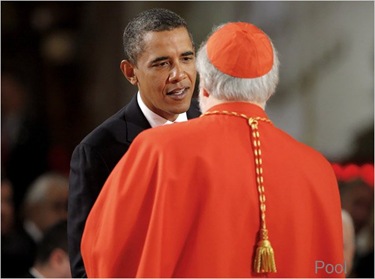
Cardinal Sean O'Malley, Father Donald Monan, S.J. (former president of Boston College, who celebrated the Mass), Father Mark Hession (who offered the homily) and members of the Massachusetts Catholic Church welcomed Kennedy’s casket in the Basilica’s hallway. This was a strong signaling of the moral and political strength of the Catholic Church and its hold on earthly issues. It was hard to do away with memories from old monarchical Europe, Anglican Britain (or even current Iran) - all contexts where Church and State have close relations. It also occurred to me how difficult it would have been for such an event to take place in this day and age in a strongly secular country such as France.

The priest mentioned both private and public aspects of his life and commented on how his Christian duty to help the poor and the hungry gave him strength and purpose to pass legislation to help the have-nots. Nothing could be closer to the real social teachings of all three major monotheistic organized religions (Christian, Jewish, and Muslim).

In the sermon the priest emphasized the obligations and expectations of all Christians (not only Catholics) to help the disposed and also named the role that Hebrew prophets played in connecting faith, personal character and public duty to aid the needy. The connection between this and the strong emphasis and practice to help the poor and to give charity in Islam was not mentioned, and was thus a lost opportunity to continue building bridges between these three major religions based on deep historical commonalities.

The live coverage of the two hour mass was indeed a great moment of Catholic rite and faith on display, one that could have also been, for some, a moment for proselytizing. I wonder if the public nature of this event will gain the Catholic Church any new devotees, or bring back some wandering members. This may have been an emotive moment that highlighted Catholic religious practice as distinct from the one that is associated with the inquisition or child abuse. This was also a good moment to break down some of the symbolic boundaries between Catholics and non-Catholics; and for Protestants, Evangelists, religious and social conservatives to realize the historical roots of their religion and how much in common their beliefs may have with the teachings of the Catholic Church. And if this were to happen this would also ease governance by Democrats and strengthen Obama’s vision of a civil religion of American- one that stresses service and the desire to work to make the United States a better place where citizens from diverse backgrounds and faiths work together to advance the common good in a way that appeals to both secular and religious members of the polity (For more on the phenomenon of Barack Obama and civil religion see Philip Gorki’s Class, nation and covenant ).

In terms of boundary-work, an interesting question I was entertaining since the beginning of the ceremony was whether only Catholics who had performed the first communion would (be allowed to) participate in the Eucharistic part of the celebration, the communion; this issue would concern Presidents Obama, Clinton, Bush and Carter - all of them Christian yet not Catholic. But the television cameras on all of the channels were broadcasting the same angle; they did not broadcast the Eucharistic service, effectively guarding the privacy of those who participated in communion and those who did not. The pretext, conscious or not, was to focus on the great performance of Placido Domingo; this view happened to afford the public at home a partial view of family members who received communion. But members of the White House and the Congress where given de facto privacy at that moment to receive communion and act in non-presidential or congressional ways, including their acts of kneeling, or not, as each one decided individually, without the pressure to perform in front of the cameras, how he or she would navigate this moment. What is the meaning of taking communion while not a practicing Catholic? Yet would it be somehow construed as disrespectful to not take communion at the solemn funeral of such a distinguished friend and colleague, regardless of one’s religious affiliation? But the way the cameras dealt with it was a great success for an accommodating secularism, maintaining faith as a private issue, while celebrating Kennedy in a religious way.

President Obama underlined the humanity and yes mortality of Ted Kennedy and all the ones present, and thus the commonalities of all beyond faith. Doing this Obama took the high road and made the eulogy really about Ted Kennedy the man and did not turn it into a political event or an event to advance his view of civil religion. But he did not need to do that then, it would have been redundant. A great example of civic religion was the life of Ted Kennedy and the religions undertones behind his lifelong legislative agenda. The best example of the marriage of Christian faith and civil religion was how the Cardinal, Priests and congregants respectfully and joyously sang “America the Beautiful” at the end of the service with the same vigor and tone as the religious hymns that had been sang earlier. As Ted Kennedy was brought back to the public street again, he left his Catholic habit behind and his coffin was covered once again with the American flag.

My final questions are whether Catholicism has now finally made it into the mainstream after a full length funeral mass was broadcasted live on a Saturday morning by NBC, MSNBC, CNN, and Fox, among others? Or was this just another exception made for the Kennedy family - were the funeral masses for Ted’s two other brothers who devoted their lives to public service just as public? Was this a sign of the entrance of Catholicism into the WASP consensus? Or was this only the confirmation of a previous acceptance of Irish-American Catholicism? Sociologists of religion claim that Italian-American versions may have also been accepted in the mainstream, as Judaism has been. Such a wide acceptance of Catholic politicians and their religious practice as we saw in the ceremony in honor of Edward Kennedy would have unthinkable 60 years ago. But who is left outside the religious American mainstream now? Islam? And how about the Latin American brand of Catholicism en Español?


Pictures taken from Cardinal O' Malley's blog!

Friday, August 28, 2009

A "dream about someday attending Berkeley again"

A powerful letter from a student reminds us of how privileged all of us who have a college degree are. Let's not forget that and do what we can to help those who were not so fortunate.

From Newsweek


A College Dream Ends too Soon

"In the spring of 2008, I sat at my high-school graduation ceremony, wearing my navy-blue robes, with every stole and honorary pin achievable, looking every bit like the overachiever that I am. My enthusiasm surely made me look like a typical graduate. But my future appeared very different from that of my classmates. I am an undocumented person. Six months after I was born, my family emigrated from Mexico to Los Angeles illegally—with little more than one suitcase but great hopes for the future. My parents wanted to give their two daughters opportunities that weren't available back home.

Still, for most of high school, one opportunity seemed like a farfetched dream. Though I had a great deal of support from many different people, nobody seemed sure how I could navigate the system to gain a college education. Information on all aspects of that process was sketchy, so I was stepping onto an unmarked path. It was difficult to live without any assurance that high school would lead, as it would for most of my classmates, to the next stage. I found solace in my studies. I took seven AP classes to test my abilities as a student and delighted in the fact that I could walk into AP English ready to dissect a Shakespeare play. I played the cello to calm my soul, dreaming of a place where music filled the air. I joined my school's leadership ranks and took pride in my ability to motivate people. And I joined clubs that enabled me to give back to a place I loved, organizing two toy drives and devoting more than 300 hours to community service.

Every activity allowed me to cling to some sense of normalcy in a life that was changing. My parents' marriage had begun to crumble, slowly and painfully. I had to learn to stand on my own, to be accountable to myself. School felt safe, and I was fortunate to have a support system in a special program for economically disadvantaged students who hoped to attend college. Every student in the program had a story of hardship, so I no longer felt quite so alone and isolated in my struggle.

I eventually came up with a small list of possible colleges—state schools that I might be able to afford or schools that offered scholarships for undocumented students. That April, I received my acceptance to UC Berkeley, and soon after, a few small scholarships. It was a bittersweet triumph. Though I was qualified to attend the best public university in the nation, I couldn't afford it. My funds barely totaled $5,000, only about one semester's tuition. Still, I wanted to attend my dream school for at least that first semester. So after graduation I hopped on a Greyhound bus with two suitcases and headed to Berkeley.

I found a tiny room near the campus, enrolled in classes, and landed a job selling jewelry in a San Francisco mall. From Friday through Monday, I worked full-time, waking up at 6:30 a.m. to get to work by 9. I couldn't spend the weekends like other students, lazing in the sun or exploring neighborhoods. Still, for two glorious days each week, Tuesday and Thursday, I had classes from 8 a.m. to 5 p.m. and was taught by some amazing professors. I would run from one class to the next, using my breaks to stop by the library. I slept odd hours, many days finishing homework at the crack of dawn. I was very well organized. Wednesday was the day I took care of business—everything from food shopping to laundry to paying bills.

Surprisingly, I found time to make friends and, perhaps more surprisingly, mostly with political conservatives. They proved to be remarkably open-minded, and I loved their outlandish conversations and unabashed candor. They never questioned my odd hours, nor did I offer to explain. They apparently believed that I was simply another workaholic. Perhaps not so "simply," but I was a workaholic for sure. I had no choice.

As expected, my funds ran out right after that first semester, forcing me to leave that very special school. I am back home now and attending community college. And I am back on the same taxing schedule—two days of classes and four days of work. My goal is to save some money while finishing up my associate's degree. I still enjoy school, but dream about someday attending Berkeley again."